Data Workers for marketing and growth data teams
Attribution, audiences and experimentation depend on event and customer data that breaks constantly. This is how marketing data teams keep it trustworthy with agents.
What going fully agentic and autonomous means for this team
- •Experiments on trusted events. Instrumentation is checked on every release.
- •Audiences that respect consent. Suppression is verified before every sync.
- •One definition of a conversion. Attribution, finance and growth agree.
- •Ad platform data that lands. Spend and conversion feeds are mapped and tied.
The shift
Marketing and growth teams run on clickstream, ad platform, CRM and consent data that changes with every release and campaign. Attribution argues, audiences leak opted-out customers, and experiments read broken events.
Data Workers checks instrumentation per release, keeps consent fresh before every sync and governs the metrics growth teams live by.
Use-case guides
- •Pipeline and conversion funnel data: Conversion rates move only when behavior does.
- •Campaign attribution data: Attribution starts from one definition.
- •Customer segmentation data: Segments are fresh and consent-safe.
- •Marketing spend efficiency data: Spend efficiency is visible daily.
Use cases, in depth
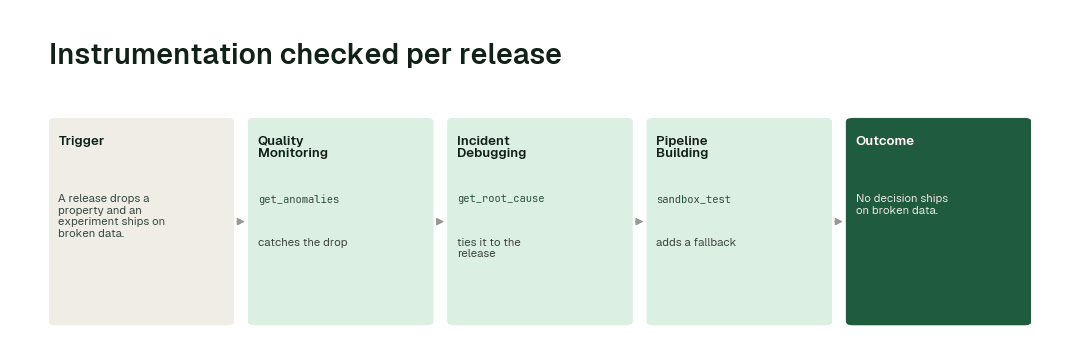
Instrumentation checked per release
Today. A release drops a property and an experiment ships on broken data.
With Data Workers. Quality Monitoring catches the drop per client version and Incident Debugging ties it to the release.
What changes. No decision ships on broken data.
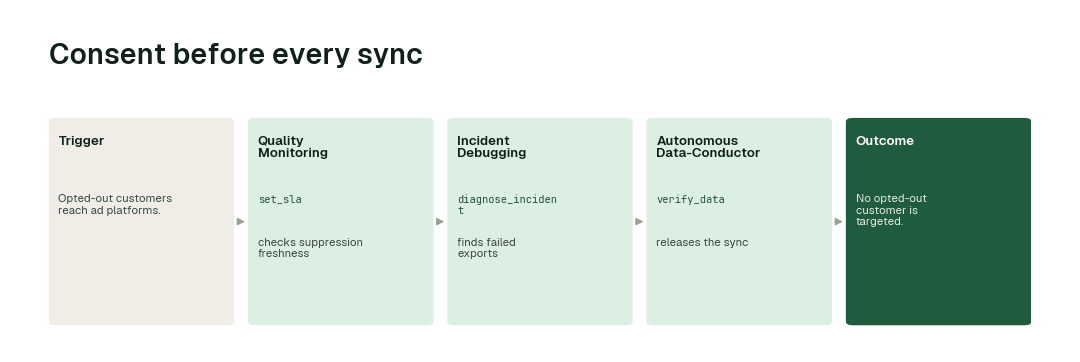
Consent before every sync
Today. Opted-out customers reach ad platforms.
With Data Workers. set_sla on suppression tables; a failing check blocks the sync.
What changes. No opted-out customer is targeted.
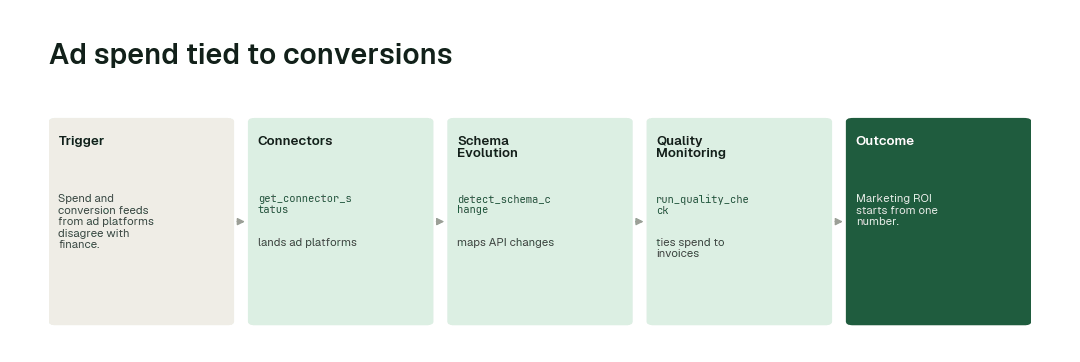
Ad spend tied to conversions
Today. Spend and conversion feeds from ad platforms disagree with finance.
With Data Workers. Connectors land every platform, Schema Evolution maps changes and Quality Monitoring ties spend to invoices.
What changes. Marketing ROI starts from one number.
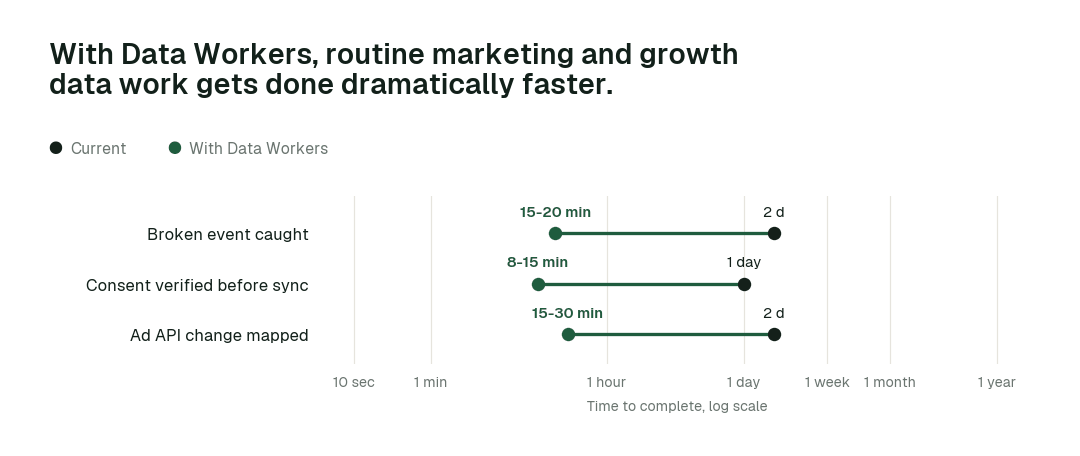
The impact metrics we move
- •Broken event caught: from about 2 days to 15-20 min
- •Consent verified before sync: from about a day to 8-15 min
- •Ad API change mapped: from about 2 days to 15-30 min
The pilot
- •Scope. Release checks and consent verification at L3.
- •First week. Agents run at L1, observing only, and show the fixes they would have made, with receipts.
- •By week two. The routine work above runs on its own; anything sensitive stays with a named approver.
- •At day 30. We review the impact metrics against your baseline:
- •Broken event caught: from about 2 days to 15-20 min
- •Consent verified before sync: from about a day to 8-15 min
- •Ad API change mapped: from about 2 days to 15-30 min
- •Cost. Start with a pilot ($7,500 one-time, credited in full against the first year). Scale is from $1,000 a month and Enterprise from $3,000 a month, billed annually, with unlimited seats, no usage meter and no markup on model spend. See pricing.