Inside the Usage Intelligence Agent
You Built 500 Dashboards. Which Ones Does Anyone Open?
Every catalog tells you what data exists. Meet the agent that tells you what your team actually uses - which tools, which workflows, and what's shelfware.
Nobody opens half of what you build
There's a thread that resurfaces in r/dataengineering in a dozen forms: anyone else sick of building dashboards no one looks at? Teams ship hundreds of them, and most go quiet within weeks. The honest version of the same thread asks whether anyone even tracks if stakeholders open what they build - and the top reply is usually I already know they don't.
Underneath the dashboard sprawl is a harder problem: nobody knows what's safe to turn off. Someone inherits an ETL job pulling from an API that was deprecated three years ago - still running, because no one can prove who depends on it. And when leadership asks the data team to justify its value, there's no good answer, because the one thing nobody is measuring is what actually gets used.
What our Usage Intelligence Agent actually does
The Usage Intelligence Agent shows you how your team actually works - by reading the tool calls themselves, not by asking.
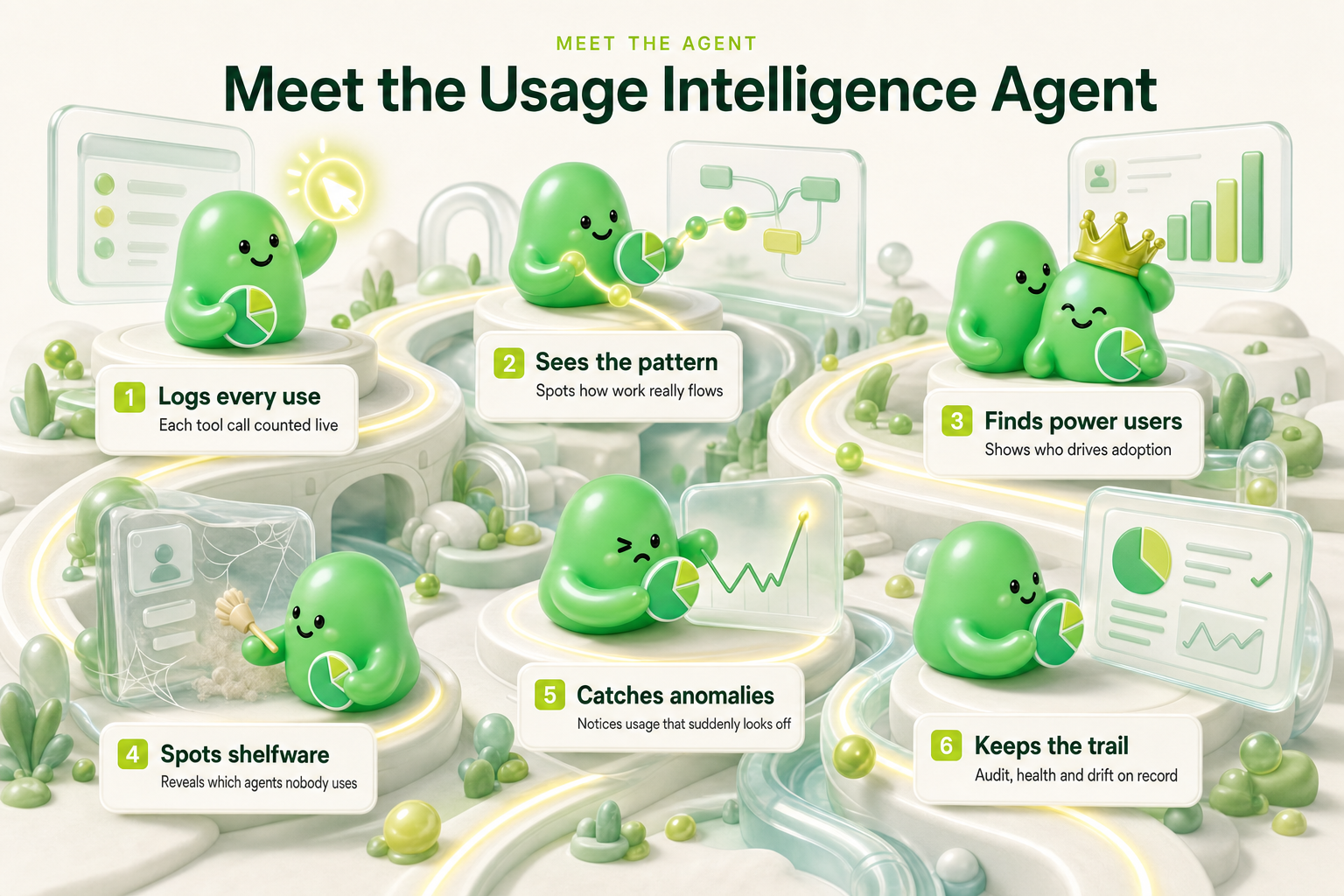
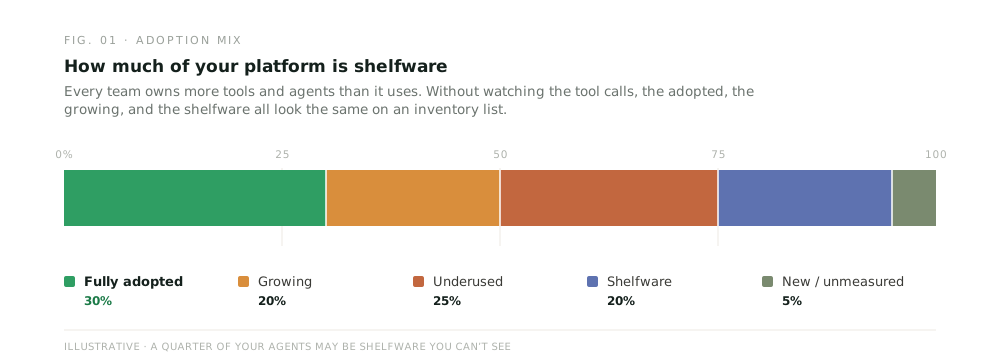
It treats every interaction - human or agent - as a usage event, then reads the patterns across them. In about a minute you can see which agents and tools are fully adopted, which are growing, and which are shelfware nobody touches. It surfaces who depends on a given asset before you deprecate it, so turning something off stops being a guess that breaks someone's morning. It detects the multi-step workflows your best people actually chain together, identifies the handful of power users driving most of the activity - and the key-person risk that comes with them - and flags when adoption of something quietly falls off. It also keeps the swarm itself honest, retaining decision audit trails, health, and drift, so you can answer an audit on demand and catch a degrading agent before users complain.
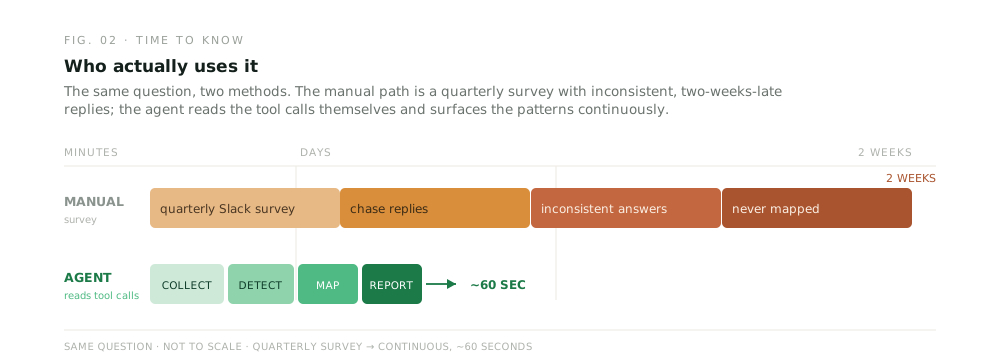
The shape of the win is evidence instead of a survey. What used to be a quarterly Slack survey - inconsistent answers, two weeks late, workflows never actually mapped - becomes a live picture of adoption, power users, and shelfware in about a minute, detected automatically across dozens of tools and kept continuously current.
Here's the reframe: usage data isn't a billing meter - it's the truth about which of your data work mattered. And the agent doesn't act on it alone: it hands the cost agent the usage evidence behind a cleanup decision, tells the catalog which tables are authoritative because people actually use them, and gives every other agent the adoption signal that tells it what to prioritize. It's the layer that turns activity into the one thing every data leader is missing - proof.
A few of the agent's capabilities
The Usage Intelligence Agent ships with a deep toolkit. A sampling of what it can do:
| Capability | What it does |
|---|---|
| Adoption dashboard | Classifies every agent and tool as fully adopted, growing, underused, or shelfware - in about a minute. |
| Shelfware detection | Surfaces the agents and tools nobody actually uses, so you stop maintaining dead weight. |
| Workflow pattern mining | Detects the multi-step sequences practitioners chain together and ranks the dominant flows. |
| Power-user mapping | Identifies the people driving most of the activity - and the key-person risk that comes with it. |
| Usage anomaly detection | Flags adoption drops and unusual spikes before they turn into a quiet problem. |
| "Who uses this?" lookup | Answers who depends on a given tool, asset, or agent before anyone deprecates it. |
| Usage heatmaps | Shows when the platform is actually busy - by hour, day, and agent. |
| Session analytics | Reconstructs work sessions to separate power users, regulars, and one-off visitors. |
| Agent observability | Tracks agent health, performance, and drift across the swarm so degradation is caught early. |
| On-demand audit trail | Keeps a tamper-evident, verifiable record of activity - turning a two-day audit scramble into a query. |
…and these are just a few of many - the agent carries dozens more autonomy skills, with new ones added continuously.
How this is different from catalog usage analytics
The closest precedents come from catalogs that mine query logs for popularity - and they all stop at ranking tables.
Alation's behavioral engine parses production query logs to rank assets by real usage, and Amundsen pioneered usage-frequency-driven search ranking - both genuinely strong at "which tables get queried most," and well ahead of a naive metadata catalog. Atlan and Secoda layer catalog usage analytics into broader governance suites. But all of these are catalog-bound and read-only: they rank tables by query frequency to improve discovery; they don't model how people chain tools and agents into workflows, surface shelfware across an agent fleet, or carry decision audit trails and drift detection. On the other side, product-analytics tools like Pendo track application usage and observability platforms watch infrastructure - but none are built for an agentic data platform, and none detect cross-tool workflow patterns.
The seam none of them sit in is usage intelligence over an agentic platform: tool-call adoption and agent observability in one place, feeding the rest of the swarm.
The takeaway
Data teams kept building things nobody used because the one signal that would tell them otherwise - what actually gets used - was the one thing nobody measured. Catalogs inventory what exists; they don't tell you what matters. An agent that reads the tool calls themselves turns adoption, workflows, and shelfware from a quarterly guess into a live, provable picture - and gives every other agent, and every data leader, the evidence they were missing. You can't improve, deprecate, or justify what you can't see being used.
See it on your own platform
Point the agent at your stack and watch it surface what's actually adopted, who your power users are, and which dashboards and tools are quietly shelfware - in about a minute, not a quarter. Book a demo to see it on your stack.