Spellbook Data CatalogA data catalog reimagined
for the agentic world
The human control plane of the Data Workers Autonomous Agentic Data Platform, in preview today. It is the control plane for your agentic data ecosystem. One calm surface to understand your stack at scale, ask it anything, and command the workforce that keeps it current. No terminal, no SQL, no YAML.
What it does
The new data catalog, powered by agents.
Legacy catalogs are Sisyphean: crawled, stale by the following morning, maintained by whoever lost the argument about who maintains them. Spellbook’s pages are written by the fleet as a byproduct of doing the work: what an asset is, who owns it, which decisions shaped it, what broke and how it got fixed. Agents classify structured and unstructured data, generate the metadata, and flag quality issues as they go. Tribal knowledge lands attached to the asset it actually describes.
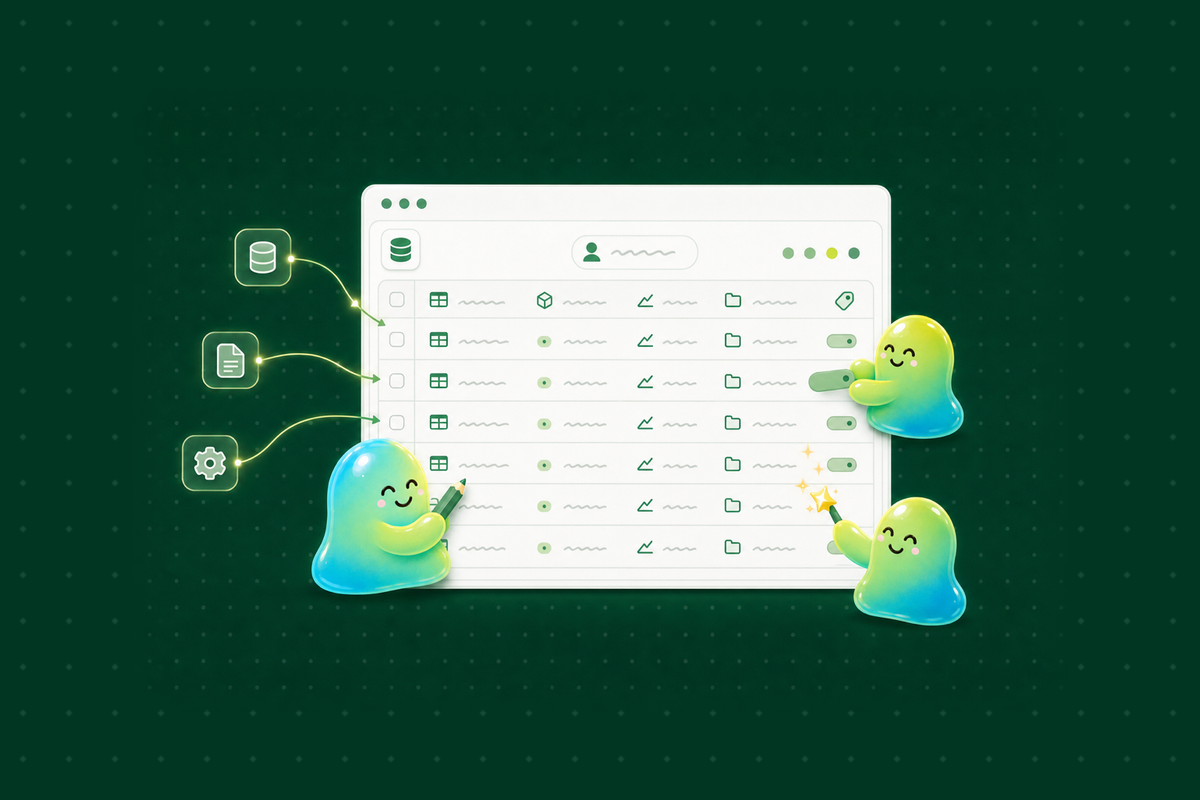 Agents read and write your catalog, governed
Automated metadata discovery, enrichment & maintenance
Human-first control plane
Metadata now maintained by agents
Agents read and write your catalog, governed
Automated metadata discovery, enrichment & maintenance
Human-first control plane
Metadata now maintained by agents
Data assets are now awesome.
Click into any table, dashboard or model and the whole story is there: what it is, who owns it, which decisions shaped it, what broke and how it was fixed, and where it flows next. The agents that touch an asset update its page as they work, so it reads like living documentation, not a crawled record.
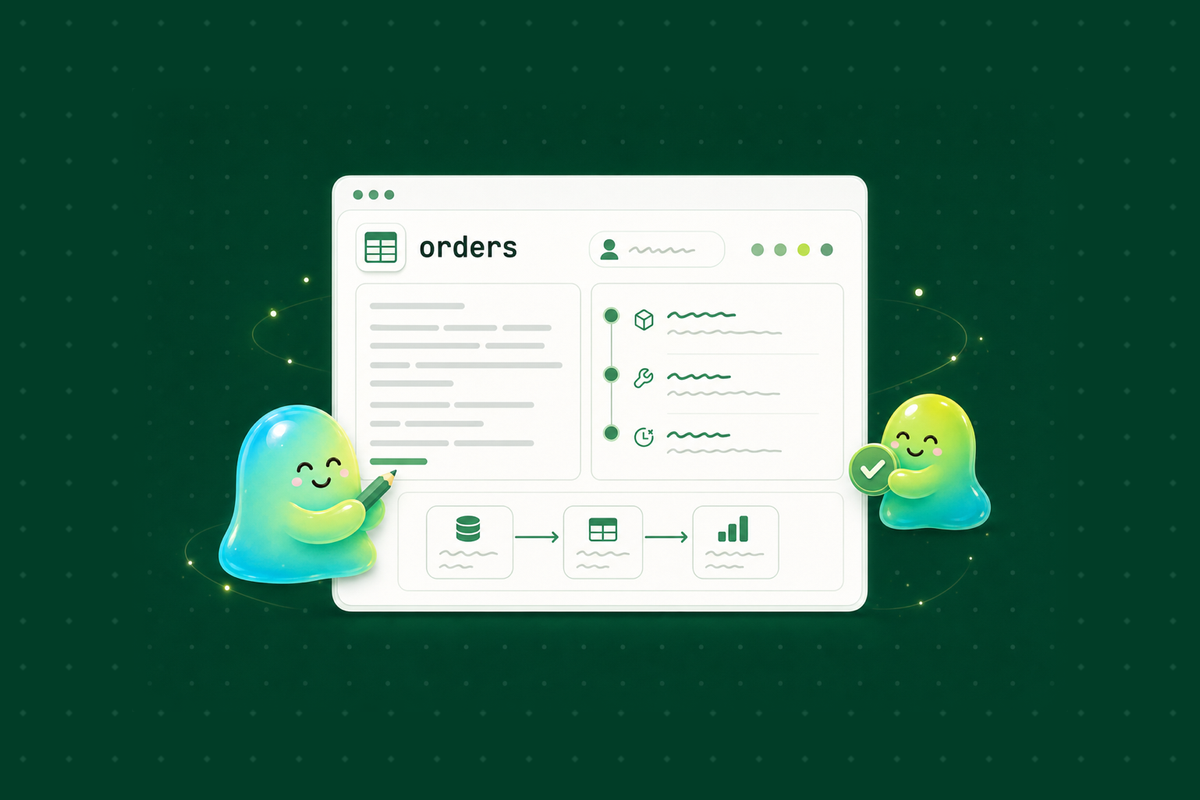 Deep-wiki pages for every asset
The whole story on one page
Always current, always live
History, lineage & provenance for every detail
No-code browser UI for every asset
Every asset cleaned, maintained and governed
Deep-wiki pages for every asset
The whole story on one page
Always current, always live
History, lineage & provenance for every detail
No-code browser UI for every asset
Every asset cleaned, maintained and governed
Ask a question, get staff-level data insights.
Data access, democratized. Nobody should have to write SQL or learn a new tool: ask in plain English, out loud if you like, and business-analyst mode returns a rigorous, source-linked answer. Search finds assets by their business meaning across every platform you run, not by keyword match. And because definitions, ownership and lineage are explorable in one place, new team members get productive in days.
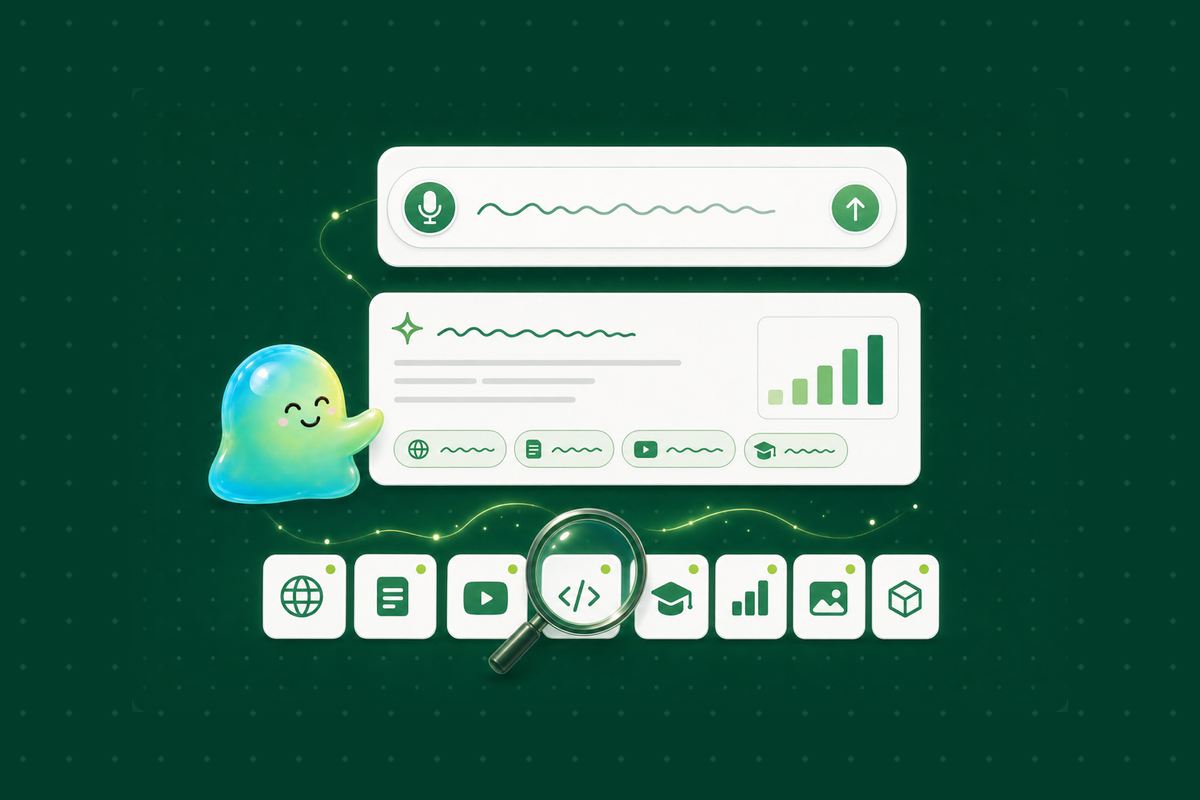 Ask in plain English, or out loud
Answers grounded in company-wide knowledge
Agentic search by business meaning
Automated insights on tap
Ask in plain English, or out loud
Answers grounded in company-wide knowledge
Agentic search by business meaning
Automated insights on tap
The control plane for humans and agents on data.
One calm surface for the whole fleet, in a browser: where the work is going, what’s running now, and what needs you. Point the agents at a domain, scope how far they range, pause anything mid-flight. Everything they want to make official lands in a single inbox: approve it, steer it, send it back, or roll it back after the fact, with the full trace of what the agent saw and why it acted. And the guard sits in the write path rather than in a policy document. No agent can promote its own work to authoritative or canonical. Nothing becomes official without a signature.
 One calm surface, no terminal or YAML
Point the fleet, scope it, pause it anytime
One inbox: approve, steer, send back, roll back
Authority guard enforced in code
One calm surface, no terminal or YAML
Point the fleet, scope it, pause it anytime
One inbox: approve, steer, send back, roll back
Authority guard enforced in code
Data management is poor, data catalogs get stale, this one is different
- Spellbook Data Catalog
- Manual cataloguing
Fig. 1: Catalog coverage over time. Share of discovered assets carrying an owner, a description and a classification, over the first six months. Manual cataloguing (slate) rises during the initial documentation push and then decays as the estate changes faster than anyone updates it; Spellbook (green) is written by the fleet as a byproduct of the work. Illustrative.
Agentic cataloguing is an enterprise productivity gain
Fig. 2: Hours per person per week spent locating a dataset, confirming it is the right one, or re-deriving a definition that already exists, by role, ordered by distance from the data platform. Today in slate, with Spellbook in green. The loss is largest for the roles nearest the data, but no row reaches zero. Illustrative.
“Data cataloging and metadata collection have long been a Sisyphean task. Often necessary for compliance and efficiency, this is a manual process, painful for engineering and data teams to maintain, and therefore the catalog is always incomplete. We strongly believe legacy data catalogs will be disrupted wholesale over the coming years. Their replacement will become a keystone in the AI data stack, and a massive enabled of enterprise AI adoption.”
“The tribal knowledge required to ask the right question of the right data was locked in experts’ heads. That capped the value of the data itself: stories waiting to be revealed, buried not because the data wasn’t there, but because the knowledge to unlock it wasn’t accessible.”
Ready to go autonomous and agentic?
See how your enterprise data stack can operate fully agentic today.
© 2026 Data Workers, Inc. Our copy, documentation, research and non-open-source agent designs, orchestration patterns and evaluation methods are proprietary and are not licensed for reimplementation. The open-source core is Apache-2.0 and that licence governs it. Read the full IP and AI usage notice.