Inside the Cost Savings & Data Cleanup Agent
You're Paying to Store Data Nobody Has Queried in Months.
Cost dashboards tell you the warehouse is expensive. Meet the agent that traces every credit to its cause, checks a cleanup is safe, and hands the owner the change to approve.
Nobody can say where the money went
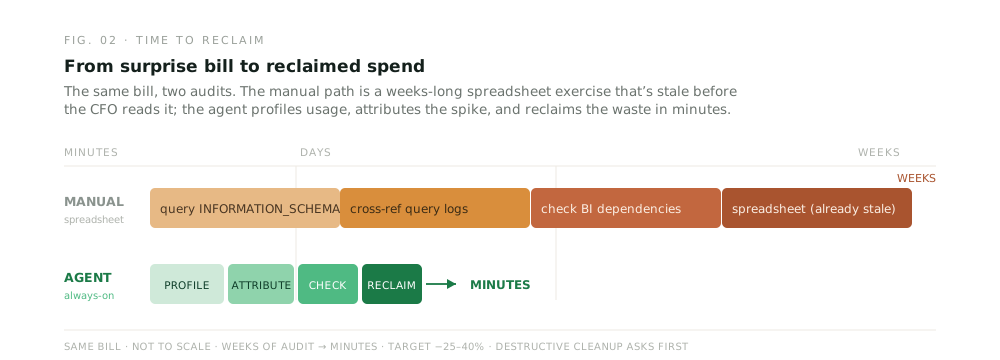
Every few weeks r/dataengineering produces another bill-shock thread: a $22,000 invoice from just firing some queries, a $50,000 BigQuery surprise after a weekend of testing, a Snowflake bill that nearly got me fired. The numbers differ; the story is the same. The warehouse is wonderful right up until the invoice arrives - and then nobody can say exactly where the money went.
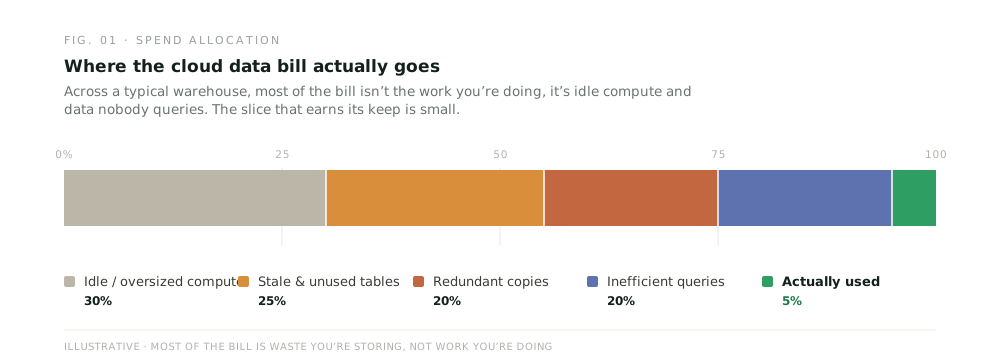
So a human starts the audit: query the information schema, cross-reference the query logs, check which dashboards still depend on which tables, build a spreadsheet - and by the time it's done, it's already stale, while the waste keeps compounding. The painful truth across most warehouses is that a large share of the bill isn't the work you're doing at all - it's idle compute billing around the clock and stale tables nobody has touched in months, quietly racking up storage.
What our Cost Savings & Data Cleanup Agent actually does
The Cost Savings & Data Cleanup Agent treats your bill as something to act on, not just a chart to read.
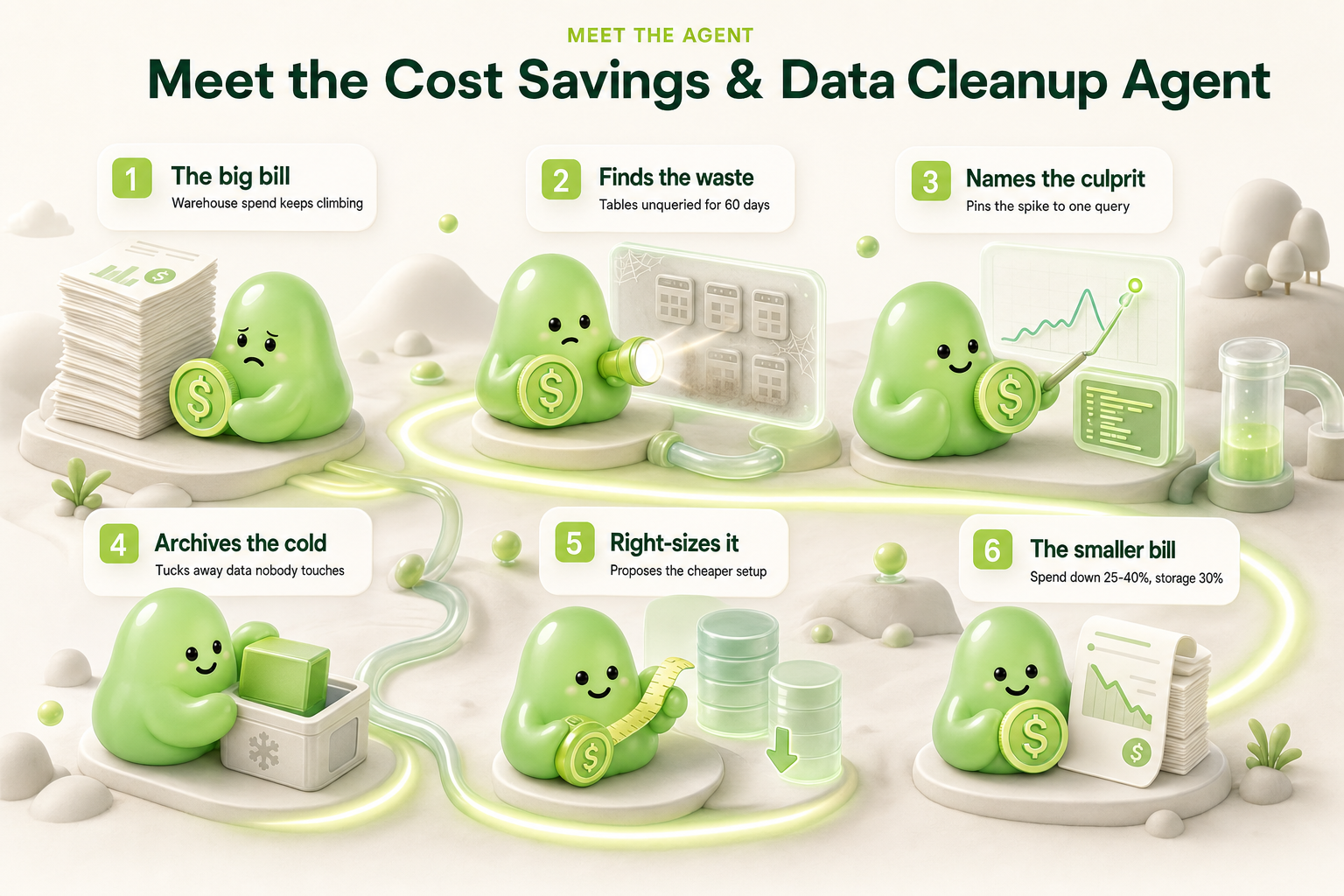
It continuously reads spend and shows you exactly where the budget goes - per query and per dbt model on Snowflake, the account total on BigQuery, monthly cost by service on AWS - in minutes, not a three-week manual audit. When a Snowflake bill spikes, it attributes the jump to the exact query, dbt model, or run that caused it - and proposes a concrete fix. When your team marks a stale table, a redundant copy, or an oversized warehouse for cleanup, the agent checks every downstream consumer with blast radius before anything moves and drafts the archival change or the warehouse settings for the owner to approve and apply, so reclaiming storage never breaks a dashboard. The spend view stays current, so waste shows up the week it starts, not after a one-time audit.
The shape of the win is a bill you actually understand. Every Snowflake credit is traced to the query and dbt model that spent it, every cleanup is checked against what depends on it before anyone approves it, and the owner applies each change knowing exactly what it touches.
Here's the reframe: cost optimization isn't a dashboard you read - it's waste you remove. The chart was never the hard part. And the agent doesn't work alone: the usage-intelligence agent tells it what's actually being used, the catalog agent supplies the lineage that makes archival safe, and the governance agent keeps every action inside policy. Cost control sits inside a team that shares one picture of your stack - not a console that hands you a worklist nobody has time to work.
A few of the agent's capabilities
The Cost Savings & Data Cleanup Agent ships with a deep toolkit. A sampling of what it can do:
| Capability | What it does |
|---|---|
| Per-model attribution | Ties Snowflake credits to the query, dbt model, and run that spent them. |
| Spend attribution | Breaks the bill down per query and dbt model on Snowflake, with the BigQuery account total and AWS monthly cost by service alongside. |
| Cost-spike root cause | Traces a Snowflake spend jump to the exact query or dbt model behind it. |
| Redundancy review | Checks the duplicate datasets and redundant materializations your team flags against everything downstream. |
| Inefficient-query analysis | Identifies the expensive query patterns quietly driving compute cost. |
| Compute right-sizing | Drafts warehouse sizing and auto-suspend settings for the owner to apply. |
| Dependency-checked archival | Verifies downstream consumers before recommending anything for removal. |
| Owner-approved cleanup | Sends every archival or drop to its owner as a proposal, so data only moves when a person approves it. |
| Retention proposals | Drafts retention and archival changes under your rules for the owner to approve and apply. |
| Swarm hand-off | Loops in usage, catalog, and governance so a cleanup never breaks downstream or breaks policy. |
…and these are just a few of many - the agent carries dozens more autonomy skills, with new ones added continuously.
How this is different from a cost dashboard
The warehouse-FinOps space is real and genuinely capable - and most of it stops one step short of removing the waste.
Keebo autonomously tunes Snowflake's compute knobs for measured, attributed savings - but by design it stays data-blind, so it shaves the bill without ever cleaning up the stale data underneath. SELECT and similar tools give deep, CFO-legible credit attribution by user, role, and BI tool - excellent visibility, but acting on it is still your job. Unravel and Revefi go further into autonomous remediation with deep warehouse telemetry and validate-then-revert safety - genuinely strong, but each is scoped to one or two warehouses and the cost vertical alone. And Snowflake's own optimizers only ever look inside Snowflake.
Where they stop is breadth and cleanup: they tune or report spend on a single platform. Our agent attributes the cost down to the dbt model on Snowflake, reads BigQuery and AWS spend alongside, and checks every cleanup against what depends on it before the owner approves it, as one member of a swarm that shares context with usage, catalog, and governance. The dashboards tell you it's expensive; this closes the loop to cheaper.
The takeaway
Warehouse bills became mysteries because the tooling stopped at the chart: it could tell you spend was up, but not safely turn the waste off. So the audit stayed manual, went stale, and the idle compute and stale tables kept billing. The way out isn't another dashboard - it's an agent that traces every credit to its cause, proves a cleanup is safe, and hands the owner the change to approve. You shouldn't be renting storage for tables nobody has opened since last quarter.
See it on your own bill
Point the agent at the warehouse that surprised you last month - and watch it show you exactly where the money goes, attribute the spike, and line up the cleanups it can prove are safe for your approval. Book a demo to see it on your stack.