Inside the Data Context & Catalog Agent
"Which Table Do I Use?" Should Take 30 Seconds, Not 30 Minutes.
Data catalogs rot because humans have to keep them alive. Meet the agent that answers "explain this table" across every platform - and keeps itself current.
Most of the job is just finding the data
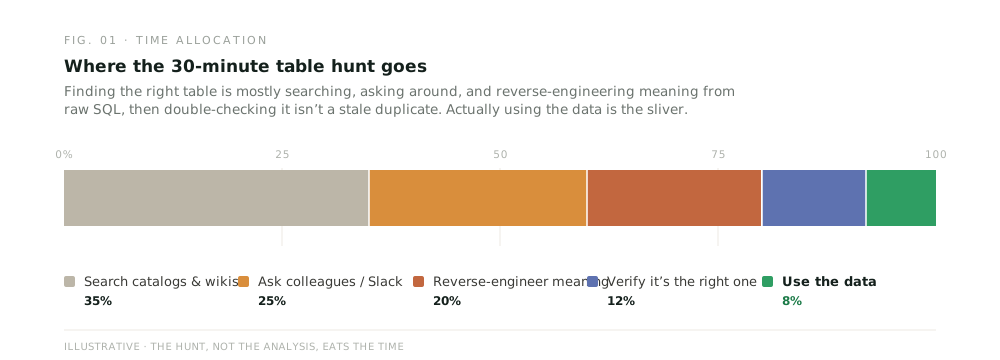
A BI analyst put it bluntly on Reddit: 70% of my job is hunting down data. Not analyzing it - finding it. Which table is the right one, what the columns actually mean, who owns it, whether it's the canonical source or a stale duplicate someone forked two years ago. The answer lives in five tools, three Slack threads, and one person's head.
So teams buy a catalog. And then the catalog rots - because keeping it current is manual, and nobody wants to do the work. Ask r/dataengineering how companies with hundreds of databases document them and the top reply is in my experience, they don't, lol. The meaning of your data becomes tribal knowledge, and when the one person who knew it leaves, it leaves with them. A catalog nobody maintains is just a more expensive way to not find your data.
What our Data Context & Catalog Agent actually does
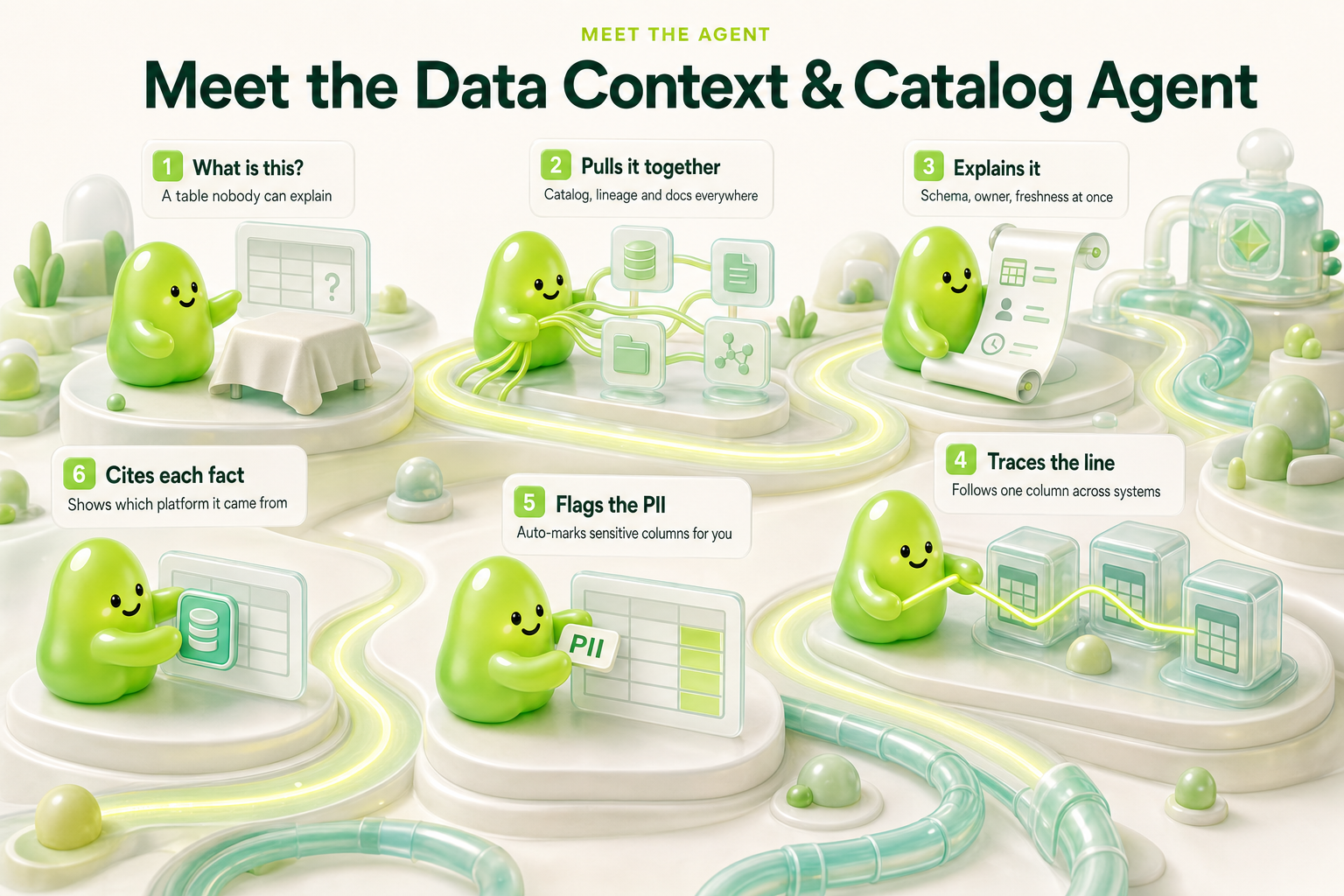
Ask the Data Context & Catalog Agent to explain this table and you get one complete, sourced answer - not a search results page.
In a single profile it tells you what the table is, where it comes from, who owns it, how it's documented, and how far to trust it - and every fact is tagged with which platform it came from, so you can trust it and trace it. Those answers span your whole stack at once: warehouses, transformation layer, orchestrators, BI - so what you see reflects your real, multi-platform reality, not whatever one vendor's catalog happens to know. It follows a column from its source through every transformation to the dashboards your team has recorded, as one connected lineage graph, flags what would break downstream if it changed, carries the personal-data tags from pull request privacy checks and data owners, and names the authoritative table when duplicates compete. And it documents new tables as they appear, so the picture stays current on its own.
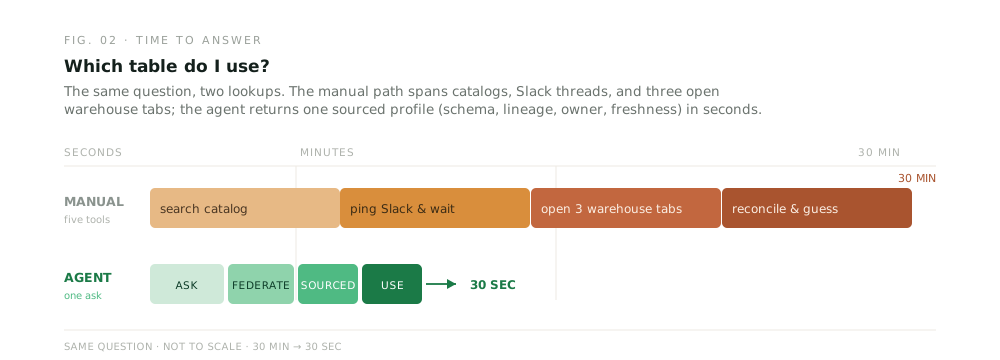
The shape of the win is a different kind of lookup. What used to be a thirty-minute hunt across catalogs, Slack threads, and three open warehouse tabs becomes a single thirty-second question - and the meaning of your data stops being a single point of failure that walks out the door when someone quits.
Here's the reframe: a catalog isn't a directory you maintain - it's a living memory that maintains itself. Most catalogs are destinations: a place you go to look something up, that someone else keeps current by hand. This one works the way you and your agents actually work - across every platform at once, answering in plain language, writing earned knowledge back so the next person inherits it. And it doesn't work alone: the schema agent feeds it lineage on every change, the quality agent feeds it trust scores, and the rest of the swarm queries it for context before they act.
A few of the agent's capabilities
The Data Context & Catalog Agent ships with a deep toolkit. A sampling of what it can do:
| Capability | What it does |
|---|---|
| Explain this table | Returns one complete, sourced profile - definition, lineage, ownership, documentation, trust score - in seconds. |
| Cross-platform discovery | Searches across warehouses, transformation tools, orchestrators, and BI in a single ask. |
| Provenance on every fact | Tags each answer with which platform it came from, so you can trust and trace it. |
| Cross-platform lineage | Follows a column from source through transformation to the dashboards your team records, as one connected graph. |
| Blast-radius view | Shows what downstream breaks if a table or column changes, across platforms. |
| Auto-documentation | Writes and refreshes table and column descriptions instead of leaving them blank. |
| Self-updating catalog | Documents new tables as they appear, so the picture stays current without manual upkeep. |
| PII & sensitivity tags | Carries the personal-data tags from pull request privacy checks and data owners across connected assets. |
| Trust score | Scores how far to trust each table, so the canonical one stands out from its stale copies. |
| Authoritative-source resolution | Tells you which table or definition is the canonical one to use, and flags the deprecated ones. |
…and these are just a few of many - the agent carries dozens more autonomy skills, with new ones added continuously.
How this is different from a data catalog
The strong catalogs are genuinely good - and they all stop one step short of the same line.
Atlan and DataHub essentially assume they are the catalog: you ingest your metadata into their system and they serve it back, beautifully, for one walled garden. Collibra and Alation are the incumbents that defined enterprise cataloging and usage-based trust ranking - but they describe, certify, score, and recommend, then hand the actual fix to a human steward. OpenMetadata is a credible open-source catalog that's added real context primitives, yet it remains a store that remembers context rather than one that resolves problems with it. And the platform-native options - Unity Catalog, Snowflake Cortex - are excellent inside their own ecosystem and gravity-locked to it, which is exactly where a team running Snowflake and Databricks and dbt gets stranded.
We don't replace any of them: the catalog stays the team's inventory, by design. We sit above them - building context from what Data Workers reads natively (warehouses, the dbt manifest, orchestrator runs, BI) with provenance on every fact, keeping it current, and, with the rest of the swarm, closing the loop from here's what's wrong to it's fixed. Cross-platform context and active, write-back use is the difference.
The takeaway
Catalogs became where documentation goes to rot because we built them as destinations someone had to maintain by hand - so they went stale, and people went back to asking around. The fix isn't a prettier catalog; it's one that answers across every platform at once, sources every fact, keeps itself current, and writes what it learns back for the next person. The knowledge of what your data means shouldn't live in one person's head - or leave when they do.
See it on your own stack
Ask it to explain the table your last dashboard was built on - and watch it return one sourced profile spanning every platform, in the time it takes to open a single tab. Book a demo to see it on your stack.